College Community
Supporting Our Children: Understanding the Rights of the Child Framework
Supporting Our Children: Understanding the Rights of the Child Framework
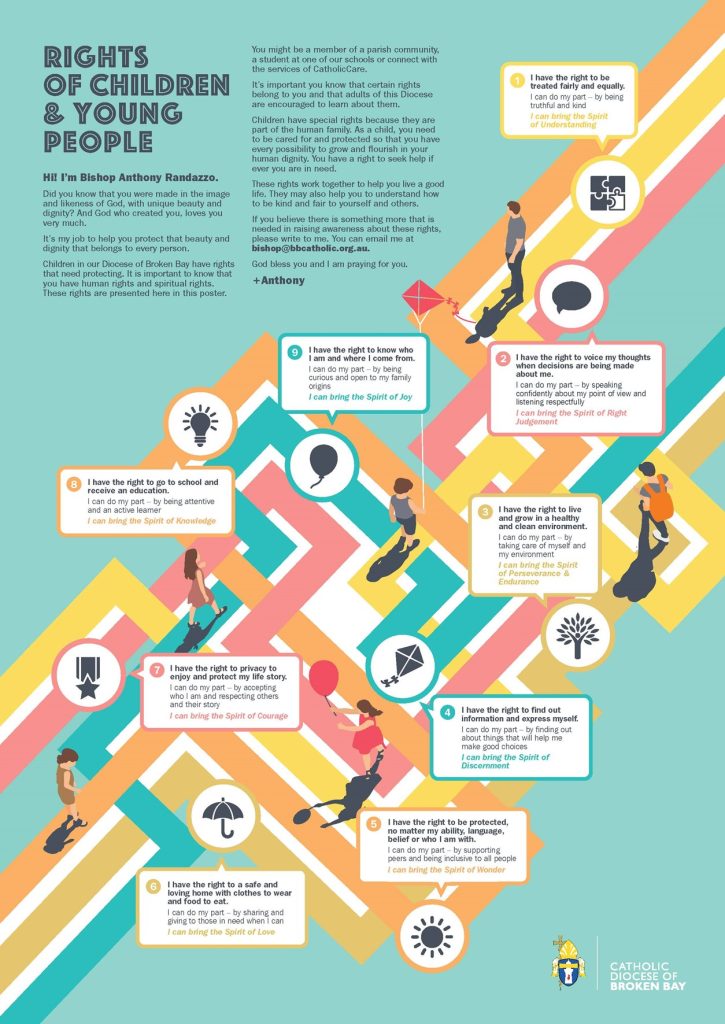
At the heart of our community is a shared belief that every child is precious, loved, and deserving of safety, respect, and opportunity. The Rights of the Child Framework, developed for children and young people across the Diocese of Broken Bay, reminds us that every child is created with dignity, purpose, and immense potential.
This framework outlines a set of fundamental human and spiritual rights. These rights help ensure all children can grow, learn, and flourish in environments that honour who they are and what they need. As parents and caregivers, understanding these rights helps us support our children, and partner with our schools, parishes, and services, to foster safe, inclusive, and nurturing spaces.
What Rights Do Children Have?
The framework highlights several essential rights that belong to every child. These include the right to:
1. A safe and loving home
Children deserve a place where they feel secure, cared for, and supported—with enough food, clothing, and emotional warmth.
2. Be protected, no matter who they are
Every child has the right to safety and protection, regardless of ability, background, language, or beliefs.
3. Education and learning
Access to schooling and meaningful learning experiences is central to a child’s growth and future opportunities.
4. A healthy, clean environment
Children are entitled to live and grow in surroundings that support their wellbeing—physically, emotionally, and environmentally.
5. Their identity and story
Every child has a right to know who they are, where they come from, and to have their privacy and personal story respected.
6. Fair and equal treatment
Children must be treated with kindness, honesty, and fairness.
7. Voice and participation
When decisions affect them, children have the right to express their thoughts, be heard, and be treated seriously.
8. Information and expression
Children have the right to seek information, learn about the world, and express themselves responsibly.
How Children Can Play Their Part
Each right in the framework is paired with a simple action children can take, such as being inclusive, speaking confidently, or learning actively. These reminders encourage young people to see themselves as capable participants in their own wellbeing and in the wellbeing of others.
How Parents and Caregivers Can Support These Rights
Here are some ideas for weaving these rights into everyday family life:
- Create open conversations: Encourage children to share their feelings, ideas, and concerns.
- Model fairness and inclusion: Children learn deeply from the way adults treat others.
- Celebrate identity: Share family stories, explore cultural roots, and listen when your child speaks about who they are.
- Promote safety: Ensure your child knows who to turn to if they feel unsafe or unsure.
- Support learning: Show interest in schoolwork and nurture curiosity at home.
- Care for the environment together: Small acts, like recycling, gardening, or reducing waste, help children feel empowered.
A Shared Commitment
Bishop Anthony Randazzo reminds us that every child is made in the image and likeness of God and is deeply loved. Our shared responsibility is to protect that “beauty and dignity” in every child, at home, at school, and in all places where children spend time.
By embracing this framework, we strengthen a community where every young person feels valued, understood, and supported to become the person God created them to be.
If you or your child would like to learn more or share ideas about raising awareness of these rights, Bishop Anthony warmly welcomes contact at bishop@bbcatholic.org.au. See more information here: Diocesan Safeguarding